Outreachy report: March 2026
We received a total of 3,798 initial applications for the May 2026 cohort, and we approved 362 initial applications (which is about 10,5% of all applications). While we did detect several cases of plagiarism and LLM usage, they corresponded to less than 5% of initial applications. We had seen a slight decrease in initial applications in the previous three cohorts, but the volume of applications we received this cohort reflect a renewed interest in the program. Handling it as other similar programs and organizations wind down remains our biggest concern; our review capacity was reduced by 50% compared to the previous year.
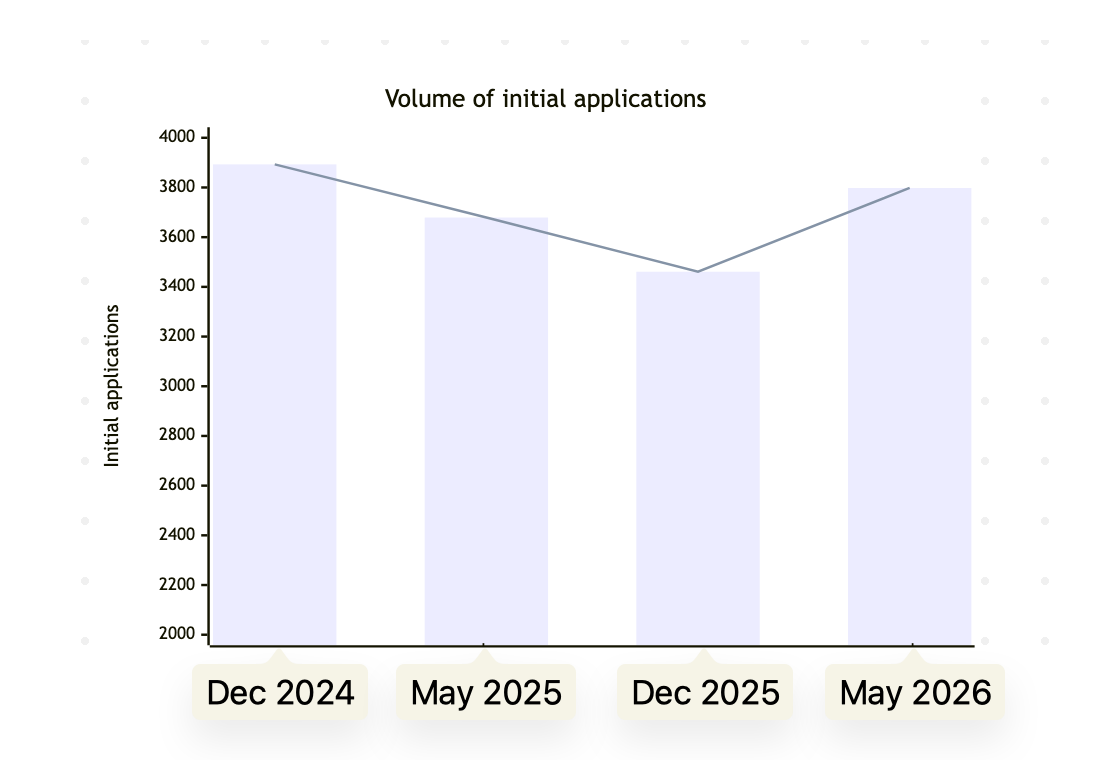
As the volume of initial applications grows again, I remain preoccupied with managing a just reviewing application process. We face a multifaceted problem. We need to select applicants with a baseline of competencies. Several communities have alerted us that they received an influx of unprepared applicants — the most common complaints are not knowing fundamental Git principles and ignoring community guidelines and standards in several channels (e.g. pull request submissions, interactions on issues). In the previous year, a community withdrew from our contribution period because they couldn’t find a fitting applicant. We observe that communities are willing to lower some requirements (e.g. teach them security fundamentals rather than have an applicant already familiar with them) in order to select an intern; still, communities report a decreased interest in independent learning. Additionally, the intrusion of LLM usage on community interactions has decreased the quality of interactions.
Secondly, as we head to another decade of Outreachy, we worry that a first-come-first-served policy may favor applicants from previous years — a total of 65% of approved initial applications belonged to returning applicants. However, we have a ceiling of how many applicants we can admit to the program each cohort; that ceiling is defined by the amount of internship spots offered per round. Each community has limited capacity to welcome the influx of applicants, and offering opportunities related to popular technologies or skills may double or triple the amount of interested applicants. One of the new communities approved for the May 2026 cohort withdrew their participation when they released they had understimated the task of triaging applicant interactions and contributions. All of their projects used technologies present in our top 10 skills. For example, 35% of applicants listed Python as a skil, making it the most popular programming language among our applicant pool. If we still witness situations like this while keeping a baseline of 8-10% of approved applications per cohort, approving too many applicants may overwhelm all of our mentoring communities.
Lastly, we noticed a dramatic decrease in mentorship capacity among mentoring communities. Some of our communities had earmarked funds available for the May 2026 cohort that could add one or two new internship spots. Several communities declined to use them towards the May 2026 cohort because they didn’t have structured projects or mentors available. This is a cohort where we share communities and mentorship resources with Google Summer of Code, and such programs have demanded more attention from mentoring communities as LLM usage becomes more pervasive and the amount of interested applicants grows each year. We estimate we’ll a cohort about 50 to 60% smaller than our December 2025 cohort. We’re afraid several of our mentoring communities are reaching a burn out state.
We’ll start preparations for the December 2026 cohort as soon as we select our May 2026 interns. We have a feeling we’ll need to help several of our communities restructure their mentorship capacities to help them participate again. As our current initial application format nears a decade in execution, I also think it’s a good idea to spend time designing ways of updating it to address current and future challenges. Moreover, I want to restructure our website and, more importantly, our documentation. We received several complaints about their format and applicability; if we wish to attract more communities and more sponsors, it’s a wise investment of our time to revamp them. Their current form carries significant technical debt that may become overwhelming if left unchecked and unaddressed.
Updates about the Open Mentorship Handbook will be added in a more structured manner to the April report; I hope it to be the main subject of my next post with a live page and several chapters published.